
Pen Stand Madin
Details
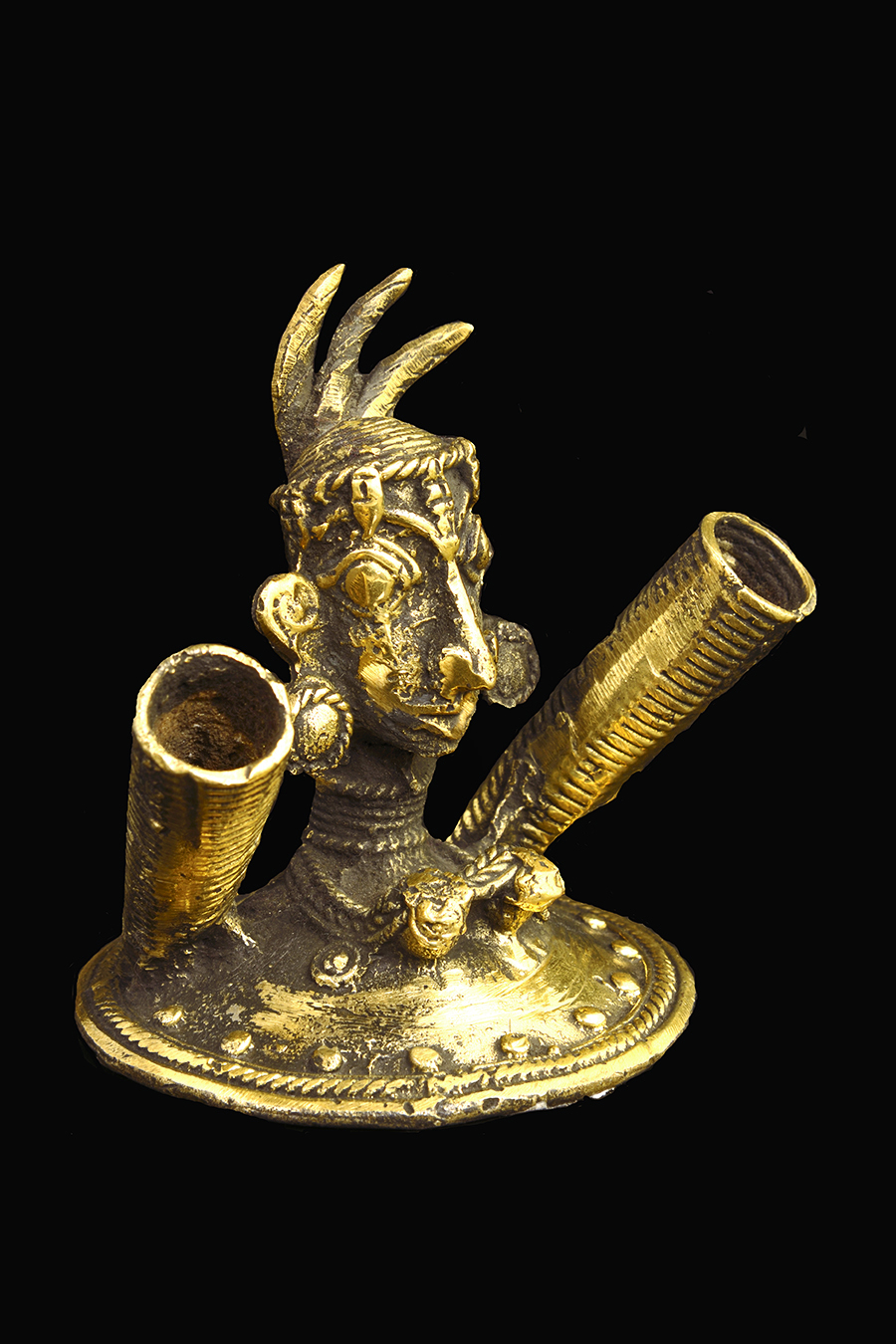
The Pen Stand Madin is a designer pen holder for your most prized writing instruments. At home or workplace, just place this uniquely handcrafted Dhokra artefact on your desktop and let the surroundings light up with the glaze of this amazingly designed brassware. It can hold up to two pens so make sure you use your best ones to fit in there. Pen Stand Madin is greatly inspired by the Bastar tribal art and hence resembles the tribal male Madin in an ethnic appearance. The traditionally handmade Dhokra metal craft uses Bell Metal as its main composition. It has been wonderfully carved and chiselled on for a vibrant visual delight. The Madin is seen in his best tribal attire all over with an apt headgear to top it all. Use it for your pens and pencils or gift it away to someone who would love collecting intriguing pieces of handicraft like this one.
About Madiya Madin Dhokra Art
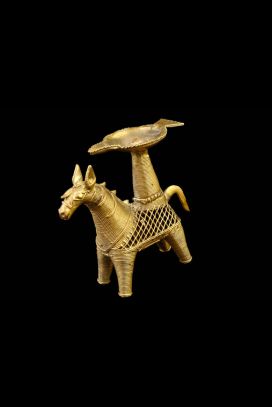
Dhokra is synonymous to oldest. The art of metal casting is centuries old and has only revived through the ages with the respective tribes of culture-rich states like Jharkhand, Madhya Pradesh, Orissa, Assam, Chhattisgarh and West Bengal restoring the Dhokra art, which is almost 4000 years .
Presently, the art is being practised by incorporating fresh design elements in order to offer a new-age phenomenon to the artefacts while keeping the traditional techniques intact. The Madiya-Madin Dhokra metal workers artefacts are distinguished for their appearance.
The statuettes or figurines of tribal men and women feature artistic ornaments while the male member of the clan is seen donning typical headgear which is made using bison horns for the Madiya and peacock feathers for Madin.
The Dhokra art of the Maria tribe of Bastar district of Chhattisgarh are experts in creating the male female statues with bell metal and their art is well recognized by antique handicraft enthusiasts.
Procedure
The Madiya Madin sculptors start with gathering soil from locally found anthill and model it into fine clay on which a second layer of clay is added. The Bastar artists mix some amount of clay and cow-dung in the second layer, which is added on the original layer.
A coat of wax in narrow threaded-like structures is applied on the second layer before compressing it through a bamboo or an object with similar space of a cavity. The thread-like structures are then used as trimmings to create stunning pictures and fine detailing work on the mould, with best artists putting up intricate designs on the mould. A thin layer of clay is then applied on the elaborately designed wax and allowed to dry.
On being dried up, the sculptor makes a number of holes on the layer in order to let the molten metal flow and thus resulting in the process of losing wax. The holes in the mould are then filled with molten brass, which replaces the residual wax and takes the shapes and patterns that were created on the wax.
The clay is then subjected to high temperatures and allowed to equally spread through the mould. In the final stages of the process, the mould is allowed to cool off and when it is hardened either partially or completely, the clay is removed from the sculpture for the purpose of decorating. Before providing final touches to the brassware, the Bastar artists chisel and polish the artefact using herbal colours.
Region
The unique Madiya Madin art of metal casting is practised in the Bastar district of Chhattisgarh. The Dhokra handicraft is exclusive to the region and none other than the Bastar sculptors (Maria tribe) can produce similar artefacts.
goroots provides a concrete backing to the Dhokra craftsmen in the remote interiors of the culture-rich states of India. We encourage the ability of the tribal handicraft artisans and genuinely support their efforts through our website.
Related
Products.....

-

Secure Payment
100% secure payment
-

24/7 Support
Online top support